31 Jul 2014

Misread by People

Minimalism as Less Elements

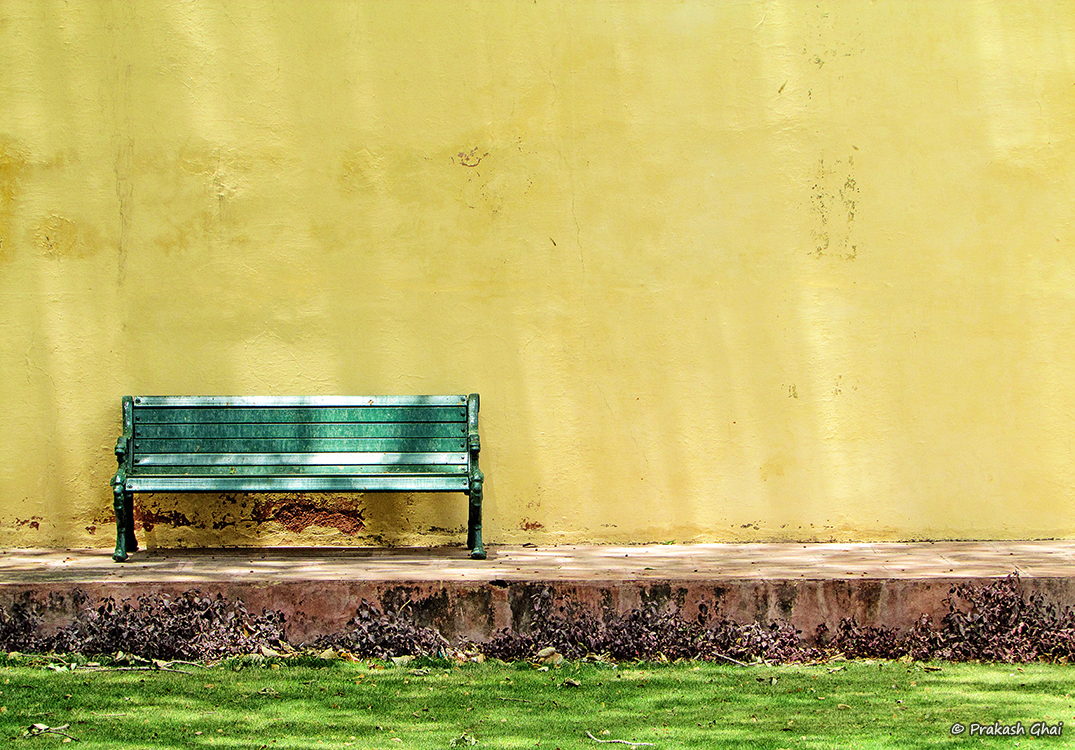
Green bench against a yellow wall at Jantar Mantar Jaipur, minimalist photography by Prakash Ghai
Minimalist Photography by © Prakash Ghai


Minimalist Photography using a Green bench against a yellow wall at Jantar Mantar Jaipur.


"Sometimes you feel that you've been "Misread" by a lot of people and you need some time on your own alone in the park, sitting on the bench reflecting back on life."

In this minimalist composition I have applied rule of thirds twice. Once at the bottom and one on the left.

Therefore, there is plenty of negative space both above the bench and also to the right, to add that classic subject isolation minimalist feel.

A green bench against a large yellow wall is an Ideal setting. To begin with, what made me attracted towards the bench, was the subtle light and shadow differential on the wall.

It was just too beautiful to look at. Maybe you could also find this, if you visit Jantar Mantar, Jaipur. 

What Makes This Minimalist Photography Composition Work?


This shot falls under the Less Elements type of minimalist photography. One isolated subject and negative space.

If you are learning minimalist photography, this composition is worth studying. The rule of thirds is something most photographers apply once.

Applying it twice in the same frame, on two different axes, is what creates that corner anchor effect. The bench is not centered. It is not floating. It sits exactly where the eye expects weight to be, and then the rest of the frame opens up.

The color contrast here is also doing a lot. Green and yellow are analogous colors, close on the color wheel, so they do not fight each other. The wall does not overpower the bench. The bench does not disappear into the wall. That balance is what makes the image calm rather than chaotic.

Also Check:

5 Minimalist Photos that Depict Less is More that showcases the use of isolated subjects and negative space.


Jantar Mantar Jaipur for Minimalist Photography


Jantar Mantar in Jaipur is one of the best locations in the city for minimalist photography. Wide walls, clean geometry, and good directional light for most of the day.

If you are visiting Jaipur and want to practice minimalism, add it to your list.

Want to own this Minimalist Photo as a Print?

A fine art print of Misread is available on Fine Art America, printed on archival quality paper and shipped worldwide. Buy the print here.

Unsuccessful Camouflage

Minimalism as in Small Objects

A Black and White Minimalist Photo of a Bird trying to hide behind on a street light.
Photo by © Prakash Ghai
Buy Now


A black and white Minimalist Photo of a small bird trying to hide behind a street light.


The Bird looks as if it was trying hide behind the light by Camouflaging.
This is Minimalism as in Small objects. As you can see here the size of the bird is extremely small and that is the primary subject. To achieve the small size, a simple way is, not to get too close to the subject and shoot from a distance.

The white background you see is the clear blue sky which I have de-saturated via photo editing. To add a bit of spice to the image I turned the camera in my hand to so that the street lamp tilted a little to the left and that added a sense of movement to the image. 

30 Jul 2014

Dual Staircases

Minimalism as Simple Geometry

Black and White Minimalist Photography of the Side view of Dual staircase openings in a building in Jaipur, shot by Prakash Ghai
Photo by © Prakash Ghai
Buy Now

A Black and White Minimalist Photo of Side view of Dual staircase openings in a building.


This Minimal shot was taken with Canon 55-250 mm lens in Swej Farm, Jaipur. These staircases were about 50-60 feet away from me and I had to zoom in a lot and also use a little higher shutter speed to avoid blur. I do not use a tripod, somehow I find it very inconvenient and of course I am lazy. So to rescue my shots I usually shoot Raw + JPEG and use the RAW file to clear out the slight blur by extracting more details and adding some sharpness.

Initially, I shot only the first staircase solo in landscape version, but that looked a bit uninteresting. Two of them in a portrait version, was the frame that I was looking for. The geometry looked extremely appealing when I paired up the staircases.

Black and White Minimalism

Minimalism Type: Less Elements

Black and White Minimalist Photography of a Torn cloth hanging over an old wooden thatch roof, shot in Jaipur by Prakash Ghai
Photo by © Prakash Ghai
Buy Now

Black and White Minimalist Photography using Less Elements and Negative Space to amplify the attention on the subject.


To compose, I placed the subject on the right, where I have primarily  interpreted the subject as intersecting lines. The torn hanging cloth adds to a bit of a story or lets say art effect to the image. To Edit this and make it look this way, one needs to simply slide up both the contrast and the brightness slider. The contrast slider a lot more, that makes the background almost disappear and makes the subject stand out. Note: don't overdo it but. 

The Setting Sun

Minimalism Type: Zeroism

Minimalist Photography: A Photo of the Rays of the setting sun on a cars roof.
Photo by © Prakash Ghai

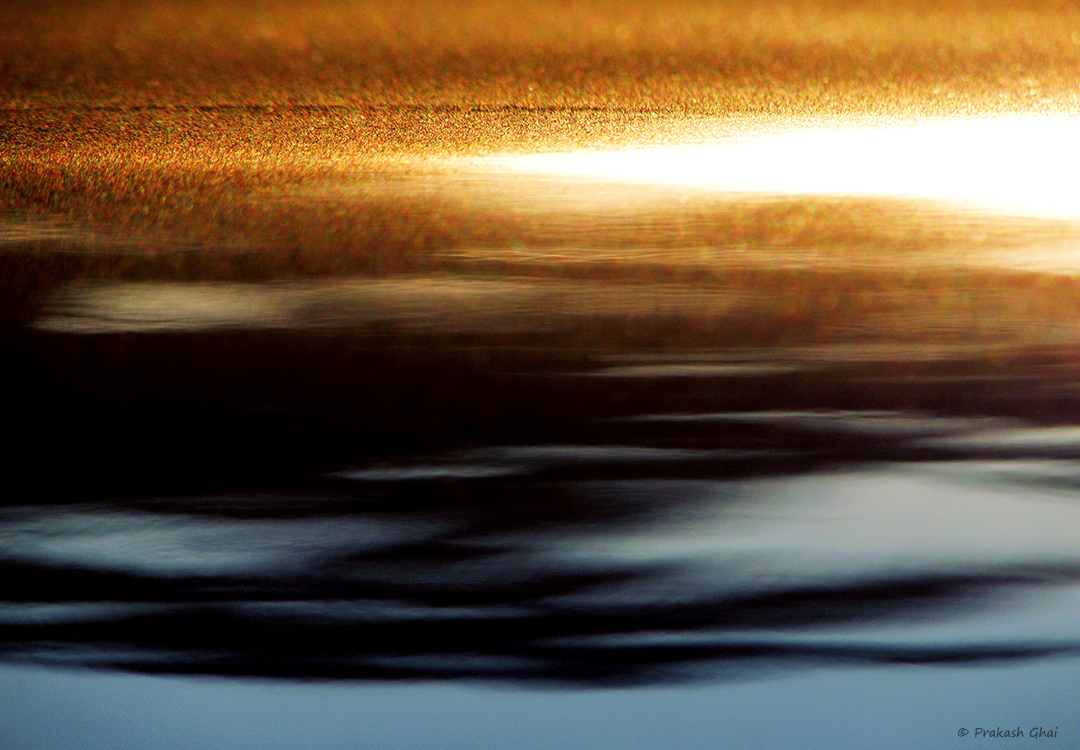
A Abstract Minimalist Photo comprising of the Rays of the setting sun falling on top of the roof of a car, creating an abstract sunset image.


This shot was taken on a late evening, while I was just outside the main gate of my house. The sun was about to set in in about 20 minutes. I spotted this unique imagery being created through its slanting rays being reflected on the roof of the car about two feet away. I decided to zoom in a bit and boom, I had this wonderful Sunset Zeroism photograph. Such kind of subjects, either you spot or you dont. It comes with a lot practice.

As a Minimalist it takes a lot time, developing a vision related to the 8 Types of Minimalism mentioned in the blog. 


Practice is Key. This took about 10 minutes to edit. I increased the vibrancy and a bit of saturation. Also, some bit of sharpness was added.

To Buy framed prints of my work head over to this section: Buy Minimalist Photos

28 Jul 2014

Phases of Life and Photography: & where "Minimalism" fits in.

In general, we all experience Three phases in Life.


Phase   I: Accumulation

Phase  II: Moderation

Phase: III: Shedding


Phase I: Accumulation


By accumulation I mean the race for material gratification in objects like cars, bikes, mobiles, gadgets, jewellery, luxurious houses, vacations etc and money in general. In this phase one wants to accumulate as much as he/she can or all of what is possibly available.

This is probably a good phase to try some wide-angle nature/landscape photography, where one can try and included as many elements as possible in the frame reflecting "accumulation". Now you may ask why only Nature or Landscape Photography?

Because in the accumulation phase you are still searching for beauty and perfection and the ideal world you want to live in. You are not yet bored of it. So this is an ideal form for people who identify themselves in this phase.

This identification does help, as once you identify the phase of your life you are currently in and align it with the kind of photography that you do, it will give you fantastic results.

Please See: Be it Photography or be it Art, it is all but a reflection of the photographer's/ artist's mind and what is he/she is currently experiencing in life and the phase he/she is passing through.  
 
Landscape photography of building reflections in water by Prakash Ghai
Photo by © Prakash Ghai
Buy Now

Phase II: Moderation


In the second phase i.e the phase of Moderation there is a sense of realization that what you already have or have accumulated is sufficient or maybe a little more than required but you are happy with it. You are content and free from the everyday struggle of making ends meet. You also have certain luxuries in life and the business is well managed and looked after by the staff.

If you find yourself in this phase you could probably try out some Wildlife or Street Photography as you now have some free time to go out and see how other people live or how the jungle life is.

Street photography of a trader at Pushkar Ajmer Rajasthan by Prakash Ghai
Photo by © Prakash Ghai
Buy Now

Phase III: Shedding


It is only when you have reached Phase III is when you realize that you need to do away with all the Extra stuff that you have. This is where Minimalism could seep in.

Your understanding towards the benefits of "less" increases by the day and it starts reflecting in your personality. It is now that you really understand the importance of simplicity over luxury. The new luxury for you now is Convenience which is a by-product of simplicity. You also now have more time for yourself and have most of the answers of life that you have been looking for all your life.

This is a good time to look at doing Minimalist Photography as now your mind is almost like an empty slate with only the necessary data to hold. When such a mind depicts itself via Minimalist Photography, the results are usually fantastic.

Black and white minimalist photography of a sea dock curve with still water negative space by Prakash Ghai
Minimalist Photography © Prakash Ghai
Buy Now

Note: Age is not a criteria here, you could be in any phase depending on your personality and perspective about life in general.

Right angled Triangle Vs the Square

Minimalist Photography as Simple Geometry 


Black and White Minimalist Photography of a Square and a Shadow Triangle at Jawahar Kala Kendra Jaipur shot by Prakash Ghai
Photo by © Prakash Ghai
Buy Now

I have used light and shadow here to highlight the geometry in the frame. The core of the photo involves two basic shapes.

a) Square and 
b) Triangle. 

Also, if you observe closely, there is another square being formed within the primary square, because of the light and shadow game-play. The shadow triangle on the bottom left acts as the supporting actor like in films, for the main lead i.e the Square. Keeping the photo to monochrome is always preferable when shooting Minimalist Photography as Simple Geometry as all the shapes and lines get accentuated. The visual impact is more.


Other Minimalist Photos that also contain a Square:


Circle Square Waves


Lines Vs Square


White Square


10 Squares

Types Of Minimalism

Last Updated: April 2026

Most photography guides talk about minimalism as if it’s just one style. In reality, it isn’t.

Through observation and practice, I’ve come to see at least eight different types of minimalism in photography. Each one works in its own way, with a different visual logic, shooting approach, and emotional impact on the viewer.

Knowing which type you’re naturally drawn to can make it much easier to shape your own minimalist photography style.


I will take each one of these sub-types one by one and lay down my interpretations of the same. I will also include photo examples for each Type of Minimalism for better comprehension.

1) Minimalism as Less Elements


Explanation: Here one isolated singular subject can be used as the primary subject, so that it receives 100% percent attention span. A secondary supporting subject can also be used to enhance the composition.

But it should be made sure that if not 100% at least the majority of the attention of the viewer remains with the primary subject.

Example:


alt="Minimalist photography example of red pipe with negative space on wall shot by Prakash Ghai in Jaipur
Minimalist Photography by © Prakash Ghai
Minimalism as Less Elements Buy a Print

As you can see above, I have used a primary subject i.e the Red Pipe and a supporting subject or the Gray Pipe, which shares less attention, as it is of the same color as the wall.

The number of elements in this Minimalist Photograph are limited to two and focus on them has been enhanced or redirected by using a lot of empty or Negative Space.

2) Minimalism as Few Distinctive Colors


Explanation: You can also use a mix of Few Contrasting Colors, primarily forming some shapes, patterns or lines as core in a Minimalist Photograph. Ideally, keep at least two to three colors in the palette, if not more.

At the same time you must try to restrict the overall elements in the frame and keep it simple. Plus, it should be obvious that the photographer's intent is clearly to show few distinctive colors as the type of minimalism.

Example:

Minimalist photography example of a blue navy and orange colorful wall by Prakash Ghai Jaipur
Minimalist Photography By © Prakash Ghai
Minimalism as Few Distinctive Colors

3) Minimalism as in Small Objects 


Explanation: This form of Minimal is literal in nature, where the subject shown is very small it Minimal in size, in comparison to the overall elements within the frame. Like how I've shown a small pigeon walking on a terrace railing below. Such Minimalist Photographs remind us of how minuscule our existence is in this infinite universe.

Example:


Minimalist photography example of a bird walking on a terrace railing by Prakash Ghai
Minimalist Photography by © Prakash Ghai
Minimalism as in Small Objects Buy a Print
 

4) Minimalism as Simple Geometry


Explanation:  Use of Simple Geometric Shapes such as circles, lines, curves, squares, cylinder, rectangles, triangles etc are some of the Basic Geometric Shapes one can use in such Minimalist Photographs. One does not need to use all of these shapes within a Single Photograph.

You can use one or more or maybe even many of these, till the time you keep the Photograph as decluttered as possible.

Example:

Minimalist photography example with Simple geometric square shapes on a yellow wall
Minimalist Photography by © Prakash Ghai
Minimalism as Simple Geometry View NFT

Like in the above example, I have used only Squares, one of the light squares changed its shape due to the angle of light and looks like a rhombus. A diagonal line is cutting the primary square. So, you can see multiple simple geometric elements, yet the frame is kept simple.

5) Minimalism as Parts of the Whole


Explanation: In such kind of Minimalist Photographs, a lot is left to the Imagination of the viewer. Here, we only show a part or a snippet of the main subject to the viewer and make him imagine the whole/rest of it.

This creates a sense of mystery about the subject and therefore, this is a great way to make the viewer engage and connect with the Minimalist Photograph. I have only shown a part of the chairs with a clean minimalist background and negative space in the example shown below.

Example:

Minimalist Photography example using parts of two chairs against red background by Prakash Ghai
Minimalist Photography by © Prakash Ghai
Minimalism as Parts of the Whole

6) Minimalism as in Repeating Shapes


Explanation: Images comprising of symmetrical repetition of mainly basic geometrical shapes (ideally) fall under this category of Minimalist Photography.

The reason repetition works in minimalism is straight forward. The brain processes repeating identical shapes as one unit. One window is one unit. Four identical windows is still one unit to interpret. That cognitive ease is the reason this type works as minimalism. 

Let's take an example to better understand this.

Example:

Minimalist Photography example using windows in repetition
Minimalist Photography by © Prakash Ghai
Minimalism as in Repeating Shapes View NFT

In the above Photograph, you can see 4 windows in repetition on a wall. These windows have perfect basic geometric shape (rectangles) and they are in symmetric order. Collectively they are one unit as well as standalone. 

One of the windows doesn't have glasses and thats why I captured it as it makes the composition interesting.

If the photo is too busy you can also call it Maximally Minimal sometimes, but mind you there should not be any clutter and the photo must have tremendous visual clarity and easy comprehension as discussed above.

The above photograph could have had 16 windows in repetition and yet still be minimal, provided it had  tremendous visual clarity and easy comprehension.

7) Minimalism as Low Detail


Explanation: Such Minimalist Photos generally carry very Low Detail. Most of the details are intentionally left out. This lack of detail engages the viewer quite well and are generally thought provoking. These images are not abstract in nature, one can still relate the subject depicted to real life/world. 

Below you see a low detail minimalist photograph of a palm leaf leaning against a fabric.

Example:

Minimalist Photography Example of low detail minimalism explained, a black and white photo of a palm leaf leaning against tent cloth by Prakash Ghai
Minimalist Photography by © Prakash Ghai
Minimalism as Low Detail

8) Zeroism


Explanation: In such minimalist photographs the subject is not directly pointed at. The viewer is intentionally made to guess what the actual subject might be. Your eye keeps searching for the core subject.

The name Zeroism comes from a simple idea. You start at zero when you look at the image. Zero subject recognition. The elements may not be clearly identifiable always or be relatable to any real world object. But the composition still has compositional logic and  elements of minimalism required for minimalist photography.

The subject simply refuses to introduce itself. We can also call it Abstract Minimalism.
But Zeroism or Abstract Minimalism is not abstract photography. Abstract photography works purely through feeling, color, texture, or form with no compositional discipline underneath. In Zeroism, a minimalist structure is always present.

Example:


Minimalist Photography Example of Zeroism shown via blurred abstract shapes behind a plastic curtain in monochrome
Minimalist Photography by © Prakash Ghai
Zeroism Buy a Print

source: https://sites.google.com/site/minimalismgroup/define

As you can see in the above photo of the black and white hazy arrangement has order and compositional logic but its not clearly identifiable. The elements are less and minimal,  also the photograph is not confusing. It is easy on the mind. If I don't tell you, you may not be able to guess the real world subject. The subject that I chose was  colorful boxes illuminate with light at a stationery store, as seen through a scratchy plastic curtain in focus at low aperture.

Conclusion


I hope the above examples of Minimalist Photographs help in explaining each Type of Minimalism in Photography. 

These 8 types are not rules. They are a vocabulary. Once you know the words, you stop wandering in front of a subject hoping something clicks. You show up with a question instead. Which type of minimalism am I looking for here?

If you are just starting out, pick one type and spend a full month shooting only that. Less Elements is where I would point most beginners. 

Personally, I love capturing "Simple Geometry" the most out of all 8 types of minimalism in minimalist photography.

Types of Minimalism FAQs


Q. Can one photograph belong to more than one type of minimalism?
A. Yes, the types can overlap. The type that has the most impact visually and is evident, is the right type for that photograph.

Q. Which type of minimalism is hardest to master?
A. Zeroism, because there is no obvious subject to anchor the frame. 

Q. Which type of minimalism is best for beginners?
A. Less Elements. Start with one clear subject and empty space around it.

Q. Can I find minimalism in busy locations or do I need to go to a quiet, less crowded space?
A. You can do either, but ideally you can find minimalist frames anywhere. In busy spaces for example, you can switch to look-up minimalism or wall close-ups. 

Q. Can I do minimalism using landscape and people?
A. Sure, landscape minimalism is fairly common, people minimalism requires decent practice. You can find one people minimalist photo example on the Contact Me page. But, most core minimalist photographers generally prefer shooting objects.

Q. How to remember all 8 types of minimalism while on field with my camera?
A. Write all 8 types of minimalism on a cue card, visiting card size. Take it out of your pocket when in front of a subject and decide the category. Eventually, you won't need the card.

Before you start capturing your first few Minimalist Photographs, I would strongly suggest you to read my post What is Minimalist Photography? and my other post Train your Eyes for Minimalist Photography.

See these Types as Fine Art Prints


Every type of minimalism described in this guide exists as a real minimalist photograph in my collection. Less Elements, Simple Geometry, Repeating Shapes, Zeroism. I have shot them all, mostly in Jaipur, over a decade of practice.

If something in this guide clicked for you, there is a good chance one of these prints will look exactly right on your wall.

Browse the collection on FineArtAmerica. Photos ships worldwide, printed on archival quality paper and canvas:
 

Experience Minimalist Photography in Person at Jawahar Kala Kendra, Jaipur


Shadow of a water outlet falling diagonally across a deep red textured wall beside the silhouette of an open doorway at Jawahar Kala Kendra Jaipur, minimalist photography by Prakash Ghai
Minimalist Photography by © Prakash Ghai
Jawahar Kala Kendra, Jaipur

If you are in Jaipur and want to experience minimalist photography in person, I run a photography walk at Jawahar Kala Kendra. We spend two hours shooting geometry, light, and shadow together at one of the most architecturally rich locations in Jaipur. I have been shooting there for over a decade.

You can book a spot directly on Airbnb Experiences in Jaipur.

More on Minimalist Photography: 

Privacy Policy

To find out how user information collected at the website, please read the following privacy policy document. Also note that changes can be made to this private policy from time to time. Keep visiting this link to stay updated.

PERSONAL INFORMATION

We may collect the following information from our users:
  • Name
  • Contact Information including email address
  • Demographic Information such as postcode, preferences and interests
  • Other information relevant to customer surveys and/or offers

WHAT WE DO WITH THE INFORMATION COLLECTED

The information collected at the website is to present our valuable readers with better services and in particular for the following reasons:
  • Record Keeping for Internal Use.
  • Improve our blog, existing products and services.
  • Send promotional emails periodically about new blog posts, products, special offers or other information which users may find interesting.

SECURITY

To make the process of collecting information secure, suitable physical and electronic procedures have been integrated with the website.

LINKS TO OTHER WEBSITES

Our website may contain links to other websites of interest. However, once you have used these links to leave our site, you should note that we do not have any control over that other website. We are not responsible for the protection and privacy of any information which you provide whilst visiting such sites and such sites are not governed by this privacy statement. You should exercise caution and look at the privacy statement applicable to the website in question.

CONTROLLING YOUR PERSONAL INFORMATION

We will not sell, distribute or lease your personal information to third parties unless we have your permission or are required by law to do so. When You use the Website, Company's servers (which may be hosted by a third party service provider) may collect information indirectly and automatically about Your activities on the Website; for instance by way of cookies. A cookie is a small amount of data that is sent to a user's browser from a web server and is eventually stored on a user's computer hard drive. This anonymous information is maintained distinctly and is not linked to the Personal Information. Whether you want your web browser to accept cookies or not is up to you. If you haven't changed your computer's settings, most likely your browser already accepts cookies. If you choose to decline cookies, you may not be able to fully experience all features of the Website. You can also delete your browser cookies or disable them entirely, but this may significantly impact your experience with the Website and may make parts of the Website non functional or inaccessible. We recommend that you leave them turned on.

Contact

Contact e-mail: prakash_ghai@yahoo.com 

27 Jul 2014

What is Minimalist Photography?

Minimalist Photography Definition


Last Updated: April 2026
 

I’m Prakash Ghai, a minimalist photographer based in Jaipur, India with 14 plus years of shooting experience.

Minimalist Photography is the practice of reducing a frame to its essential elements. Everything unnecessary is removed. By removing distractions and clutter the subject receives the full weight of the viewer's attention. The result is a photograph that is clean, uncluttered, and visually soothing to look at.​​​​​​​​​​​​​​​​ The principle is simple: less is more.

Where does Minimalist Photography take its inspiration from?

Minimalist Photography takes its inspiration directly from Minimalism.

I am not going to make you do a deep-dive into the history of Minimalism but here is how it started in short.

Minimalism that literally means "Minimum" or Reduced to bare essentials, started as a Reductive Art Movement in the 1950s in the United States led by Minimalist Painter "Frank Stella", who once famously said about his paintings "What you see is what you see."

Minimalism anchors Simplicity at its core and it is based on the principle: "That which is less complicated is better understood."

In Minimalist Photography, we follow this core Philosophy.

Why People Love Minimalist Photography?


People love Minimalist Photography because it feels calm, clean, and easy to understand. You don’t need to stare at the image for minutes to “get” it.

Even if the frame looks simple, it often feels strong and memorable. That’s why it works so well for prints, wall art, and online galleries.

What are the core hallmarks of a Minimalist Photograph?


We must Keep in mind, that a minimalist photograph must ensure four things:

  • Tremendous visual clarity
  • Enhanced or amplified attention to the core subject
  • Non-complex to look at on first glance
  • Photograph should not create a sense of confusion in the mind of the viewer.

What are the key elements of a Minimalist Photograph?


  • Lines
  • Shapes
  • Patterns
  • Symmetry
  • Geometry
  • Isolated Subjects
  • Strong Colors
  • Sharp Color Contrasts
  • Negative Space
  • Repetition

One can use one or more of the elements in the same photograph. The most used element is generally negative space along with the general rule of photography that is rule of thirds.

Other than that it is up to the photographer as to how he or she wants to proceed in composing minimalist photographs using a permutation combination of elements as per taste.

Minimalist Photography Formula


Minimalist Photography = Minimalism + Visual Art

Minimalism, which means less is more + Visual Art, which is the craft of composing a visually compelling image within a frame.

I don't mean the visual arts stream here by visual art. Just the literal meaning for it.

That formula is simple enough to remember I hope.

OK, enough of theory, now, let's take an example of a Minimalist Photograph that I took, with the use of  some basic Minimalist Photography principles and Negative Space.

Minimalist Photography Example 1:


Minimalist Photography example using broken glass wall fence composed with negative space. Shot by minimalist photographer Prakash Ghai in Jaipur
Minimalist Photography by © Prakash Ghai
Sold to ex-Sotheby's curator: View NFT

If you see above, the subject pieces of broken glass on a boundary wall is placed in the bottom 1/3rd of the frame, while 2/3rd of the frame (top) is left empty.

That empty space is negative space and it is used primarily to make the eyes lead to the subject give it amplified attention.

Also circling back to my earlier point there is "Tremendous Visual Clarity" here.

OK, Let me take one more example of a Minimalist Photograph:

Minimalist Photography Example 2:

I captured this shot at Jawahar Kala Kendra in March 2026. I have used simple geometry as my core subject here ie Lines, and used the shadow area and single color underexposed to amplify attention and focus on the subject.

Minimalist photography example of a red wall with shadow and light at Jawahar Kala Kendra Jaipur by Prakash Ghai
"Echoes of the unsaid"
Minimalist Photography by © Prakash Ghai 

What is the subject? The area in the light patch with geometry within the exterior lines of the patch. Note that I have stripped out all clutter for easy comprehension of the photograph at first glance.

Minimalist Photography Camera Gear

A lot of people ask me as to what Camera Gear I use to capture Minimalist Photos and what Camera Gear they should use for it.

To be honest, you do not need a Special Camera Gear, your regular Camera Kit or even your Phone Camera is enough to capture Minimalist Photographs.

Sure, one thing you do need is the Eye to See and see things in a different manner.

Anyways, I currently use a Canon 6D Mark II Full frame Camera and 50 mm prime and 100 mm prime lens and 24-105 kit lens to capture most of my Minimalist Photographs. Recently I have also started using my iPhone for some shots.

To view the complete list of all the equipment I use, click here: Camera Gear

Minimalist Photography Camera Settings

Now about Camera settings, I would give you a brief idea, but again it depends on your shooting style as well what settings you are comfortable with and it also depends on the subject and scene you are capturing.

Aperture:

f/1.8–f/2.8 for subject isolation. f/8–f/11 for sharp geometric scenes and if you are shooting multilayer then you can also opt for f/22. I used that a lot actually.

ISO:

Keep at 100–200 for clean noise-free images most of the times but if you are dialing down hard like me and have a full frame camera then yeah you can go as high as 4000, why not. Sometimes a bit of grains look good especially when you are shooting black and white or showcasing geometry.

Shutter Speed:

1/250s or faster for static scenes; 30s–120s for long-exposure. I personally don't do long exposure minimalism.

White Balance: 

Set manually always to avoid inconsistent tones. Some cameras perform well on Auto as well, mine doesn't that much.

Shoot in RAW: 

Shooting in raw gives maximum control in post-processing. It really comes in handy when you are shooting light and shadow minimalism. The part with most light or sunlight loses detail in JPEGs, RAW file helps you bring the detail back in those areas.

Tripod:

Essential for long exposures and for ensuring precise, deliberate composition. It also slows you down, which in minimalist photography is exactly the point.

Golden reflection of City Palace Jaipur captured on a black car hood, minimalist photography by Prakash Ghai
Minimalist Photography by © Prakash Ghai
Bid on NFT


Some quick Minimalist photography FAQs

Q. Is minimalist photography only done in black and white?
A. No, color is as valid. Black & white is only an individual preference.

Q. Do I need an expensive camera for minimalist photography?
A. No. Your phone is also enough. Minimalism is not about what gear you use. It's purely vision.

Q. What subjects work best for minimalist photography?
A. Architecture, shadows, geometry, and isolated subjects work best as these subjects have strong visual structure.

Q. How much editing is needed in minimalist photography?
A. Minimal. If you need heavy editing to make it work then the shot wasn't ready.

Q. Can I do minimalist photography indoors?
A. Yes, indoors is fine too. A single object against a plain wall is all you need to start.

Q. How do I know when to stop removing elements from a frame?
A. When removing one more thing breaks the meaning of the entire frame, stop there.

Q. How is minimalist photography different from abstract photography?
A. Minimalism simplifies reality. The subject is still recognizable. In Abstract photography it may not be. They overlap sometimes, especially in Zeroism.

Q. Do I need to crop a lot to get the frame right?
A. No, nothing as such, you may or may not crop to arrive at a clean minimalist frame. I recommend taking the final shot on the spot. 

Minimalist Photography for Beginners: 6 Simple Steps


If you’re new to Minimalist Photography and want to start shooting right away, here are 6 simple steps you can follow:

Chrome door handle with red trim on a bright green vintage car door, minimalist photography by Prakash Ghai
Minimalist Photography by © Prakash Ghai
Buy a Print

1. Choose one main subject
Pick a single object, shape, or structure as the main character of the frame.

2. Remove distractions
Move around, change your angle, or wait until people, vehicles, and messy backgrounds are gone.

3. Use negative space intentionally
Place your subject off‑center and leave lots of empty space so the eye naturally pulls toward it.

4. Look for geometry and lines
Capture walls, windows, railings, roads, or shadows that create simple shapes or leading lines. RRepetition work also works well sometimes.

5. Simplify color and tone
Avoid too many bright colors or textures. A simpler color palette often makes the image feel more minimal.

6. Shoot with intention, not luck
Think before pressing the shutter button. Each element in the frame should be there for a reason. If removing one thing breaks the meaning or the photograph, that is where you need to stop.

If you practice this way for a few weeks, you’ll start seeing the world in simpler, cleaner forms.

Minimalist Photography for Advanced Shooters


At this level you are not following steps anymore. You are making decisions. The difference between a beginner and an advanced minimalist photographer is the ability to see what does not belong in a frame before you even raise the camera. Every element you include is a choice, and every element you leave out is an equally deliberate one.

There are 8 distinct types of minimalism in photography and understanding each one is what sharpens that instinct.

I have broken all of them down here: Types of Minimalism in Minimalist Photography.

Concluding thoughts on Minimalist Photography

Minimalist photography isn’t about creating empty images. It’s about making intentional ones. Every element that appears in the frame is there for a reason. The idea is straightforward. Remove anything that doesn’t add to the photograph, and allow the remaining elements to stand out and communicate clearly.

You’ve just experienced the power of less. Now live with it. Explore the Minimalist Photography print collection:

Minimalist Photographs are "Simple" to look at but very difficult to make. You need to change your perspective. To train your eyes and start seeing subjects in term of shapes, please read Train your Eyes for Minimalist Photography article. 

It is also possible that Minimalist Photography as a genre is not meant for you, as you are currently in a very different phase of life than me or other Minimalist Photographers. Find out which Phase of Life you are currently in, that could also help you find the best suited Photography Genre for you.

Now you can also enroll for Online Classes on Minimalist Photography via Zoom or Google Meet. 

Tap here: Online Classes  or send me DM on Instagram

Experience Minimalist Photography in Person at Jawahar Kala Kendra, Jaipur


Beige walls of Jawahar Kala Kendra with sunlight carving a precise square shape across the surface, minimalist photography by Prakash Ghai
Minimalist Photography by © Prakash Ghai
 Jawahar Kala Kendra, Jaipur

If you are in Jaipur and want to experience minimalist photography in person, I run a photography walk at Jawahar Kala Kendra. We spend two hours shooting geometry, light, and shadow together at one of the most architecturally rich locations in Jaipur. I have been shooting there for over a decade.

You can book a spot directly on Airbnb Experiences in Jaipur

Must Read: