Showing posts with label Article. Show all posts

6 Jul 2026

6 Techniques to Build Custom Subjects for Minimalist Photography

Simple point and shoot Minimalist Photography is way different than creating your own custom frame to enhance the aesthetic appeal and creativity of a photograph. Doing so, also makes you stand out as a photographer as the viewer is able to see your vision and perspective more clearly and assess your creative range.

Today, I am going to share some photographs where I have created custom subjects and the techniques I've used to create them with some photo examples.

Minimalist photography of a blue electrical panel beside a pink wall with a painted vine, exhaust vent, and yellow heart shape by Prakash Ghai, Jaipur
A blue electrical panel splits the frame from a pink wall. 
Minimalist Photography by © Prakash Ghai

Build Custom Subjects for Minimalist Photography


1. Vantage Point

Vantage Point is the place where you stand or see the subject from. If that is unique, you can turn an ordinary subject into something entirely different. Steps to get a unique vantage point include things like, lowering your body, climbing up on higher ground, moving directionally to the left or right, moving forward or backwards and likewise, until you get to a point where your perspective of seeing the subject becomes fairly unique. If you vanilla stand, you get vanilla shots. You must learn to maneuver.

2. Layering or Overlapping Subjects

This is a fairly common technique where you place two subjects in the same frame, one which is closer to the lens and one which is farther away from the lens, so that the frame no longer shows you one subject but the relationship between the two. You can have many subjects in the frame of course. More than two, rather quite a few and that depends on what you are trying to compose.

3. Splitting The Frame

Every busy scene has a line hiding in it somewhere, a pole, a wire, a railing, or even the edge of a shadow. On their own these lines are nothing, but they are useful because they can be used to divide a frame into zones that would otherwise just look like clutter. An example of this is visible in the first photo on the page.

4. Borrowing Nearby Elements

This technique is about using an object that is ideally outside of your frame while you are first composing the shot, then you look for elements outside the frame and slowly bring one or two elements into the frame and decide if you want to add or remove them, then look for other things around. For example, while shooting a window on a yellow wall, you may want to take a zoomed out shot to include a red post box or dustbin in the bottom right corner of the frame or a wire on the top of the frame that acts as a straight line or curve. The field is open for creativity here. Go ahead and borrow.

5. Depth of Field Variation

This one is about deciding through aperture, which part of the frame stays sharp and which part goes soft. This also helps create sections or areas in the frame that are normally not found in vanilla point and shoot photographs. Few photographers use this technique a lot.

6. Extreme Proximity

When you get extremely close to a subject and then layer the background and other elements in the frame. This is an interesting way to make a custom minimalist frame for yourself. A naked eye would never see things this way. By getting extremely close, blurred or not, you get a part of it's geometry or color in the frame. Can one call it forced creativity? I'd say no, it's more like creating something of unique interest on purpose in the frame.

Now, let's take a few examples where I used one or more of these 6 techniques to create a custom Minimalist Subject for myself.

Example 1: 


Minimalist photography composition showing a blurred round concrete platform edge against sharp marble steps in City Palace Jaipur, shot by Prakash Ghai
A blurred concrete platform curve sits against sharp marble steps
Minimalist Photography By © Prakash Ghai

This Photograph was captured at City Palace, Jaipur. My starting point was the steps on the right but to make the composition interesting, I first decided a unique vantage point. I stood at the side of this curved sitting area that hosted a tree and then went down on my knees to bring the curve in the foreground and contrast it with the steps.

Example 2: 


Minimalist photography frame divided by a vertical pole, red tower on one side and green corrugated roof on the other at Jawahar Kala Kendra, Jaipur shot by Prakash Ghai
 A single pole splits the frame into color zones and sections.
Minimalist Photography By © Prakash Ghai

This shot was taken from the back side of Jawahar Kala Kendra, Jaipur. I stood on the footpath near the road behind it. (unique vantage point). I then used the electric pole in the foreground as a vertical line and aligned it with the corner of the box structure to split it into two and kept the green tent of an exhibition roof in the bottom row, following the rule of thirds.

If I didn't move around and layer the subject, it was not visible to regular naked eye. A decent example of creating a custom subject for Minimalist Photography.

Example 3: 


Minimalist photography of a stained red wall with a blue door, dark window recess, and a black iron ring at the edge of the frame
A weathered red wall and a pale blue door, framed at its edge by a black wire.
Minimalist Photography By © Prakash Ghai

This shot was taken yesterday when I was at a Photowalk on shapes organized by Jaipur Photographers Club. I split the frame into 1/3rd and 2/3rd by using the line of the foreground wall. Then, I borrowed an additional element on the top right of the frame, which is a curved black wire coming from an electric pole. I layered and split the frame well enough to create a unique subject for myself.

Example 4: 


Minimalist photography image with blurred white railings in the foreground and sharp columns and a green door behind.
Curves of a car roof against Jaipur traditional architecture.
Minimalist Photography By © Prakash Ghai

Here I have used shallow depth of field and extreme proximity to the subject to cut sections out in the frame and to split it. I have contrasted the blur and the non-blur part of the frame to create a unique subject which otherwise was not available as a standard point and shoot shot. In terms of juxtaposition, there's curves versus vertical lines. 

I hope the above examples are clear. Good luck using these 6 simple techniques to create custom Minimalist Photography subjects for yourself.

Regards

Prakash

Must Read:

11 Mar 2026

The World Doesn’t Need More Photographs. It Needs Better Ones.

Let me start with a number "1.8 trillion"


That is how many photographs were taken in the year 2023 alone. Can you even recall 10 photographs that you saw last week? Not the ones that you took. Just the ones you saw on Instagram or on WhatsApp, or maybe on someone’s story? I guess you cannot.

Minimalist photography of a street lamp over a palm tree at Jawahar Kala Kendra Jaipur by Prakash Ghai
Minimalist Photography by © Prakash Ghai

We are taking more photographs than ever before. And yet, most of them are completely forgotten within seconds. We are producing images at a scale and pace that has never existed in human history and the result is that no single image feels important anymore.

The world does not need more photographs. It already has more than it can handle. What it needs and what I believe most photographers want to make are better ones, not more.

The ones that have intent, purpose, recall, meaning and staying power. Not something that one scrolls past in 0.2 seconds.

Let us look at why this is happening, and what we can do about it.

Part 1: Why Billions of Photos Are Useless

The Question You Need to Ask Before You Press the Shutter!

I have been a Minimalist Photographer for over a decade. In that time, I have walked the streets of Jaipur hundreds of times with my camera, looking for the right frame. And the single most important thing I have learned from my experience is this:

Before you press the shutter, ask yourself , why am I taking this photograph?

Most people cannot answer that question. Not because they are bad photographers. But because they have never been asked to think about it, not by others, not by they themselves.
Today, taking a photograph requires close to zero effort. The phone is always in the pocket and the camera is always ready with one swipe.

There is barely any cost to pressing the shutter, unlike the film camera era. And so people press it constantly, without thinking, without waiting, without any real reason beyond “this is happening and I should capture it.”

The result is a photograph that has close to zero reason to exist in most cases.

We Have Confused Volume with Vision


Somewhere along the way, we started believing that taking more photographs makes you a better photographer. It does not.

Taking more photographs makes you a faster photographer. It is more practice alright, but It does not turn you into a more thoughtful one.

The photographers whose work we still remember like Ansel Adams, Henri Cartier-Bresson, were not known for the number of photographs they took. They were known for the quality of the photographs they chose. Ansel Adams once said that twelve significant photographs in a year is a good crop. Twelve. In one year.

Most photographers today post twelve photographs in a single day.

There is nothing wrong with posting often. But let us be honest with ourselves. Posting twelve photographs a day is content creation. It is not the same as making twelve great photographs.

Algorithms Reward Speed, Not Depth


Social media has made this problem worse. Before digital photography, there was a natural filter in place. You shot on film cameras. Film rolls cost money. Development cost more money. Therefore one were careful. Film photographers waited before pressing the shutter.

Then came digital photography which removed the cost of mistakes. And then social media arrived and rewarding people who posted often and fast to please the algorithm.

The algorithm does not know if your photograph is beautiful. It only knows if people responded to it quickly liked within the first hour or so, maybe they were just your friends motivating you who had no idea about art and aesthetics.

Photographers adapted and started posting more over time. They started chasing trends. They started shooting what gets likes rather than what feels true. This is what ruined it.

And the result is what we see today are a flood of images that all look the same, that all use the same presets and the same angles and the same captions, and that none of us can remember five minutes after we scroll past them.

A photograph captured without intent has no reason to exist. It is a useless photograph. And the world is currently full of such photographs.

Sure there are still a lot of thoughtful and talented photographers out there but most are buried under algorithms.

minimalist photography at jkk jaipur using simple geometry on a red wall by Prakash Ghai
Minimalist Photography by © Prakash Ghai


Part 2: Why Minimal Art Survives


What Minimalism Actually Means


I want to clear up a common misunderstanding here. People often think that Minimalist Photography means “simple” or “empty” or “boring.”

It means none of these things.

Minimalism means that every element in the frame has a reason to be there. The subject is there because it needs to be. The empty space is there because it helps the subject. The light is there because it creates the right mood.

Nothing is accidental. Nothing is extra.

This is actually much harder to achieve than a complex, busy photograph. In a complex photograph, you can hide behind lots of detail. But in a Minimalist Photograph, there is nowhere to hide. 
Everything is visible.

minimalist photography at jawahar kala kendra jaipur including a light switch on white wall and big across shadow by Prakash Ghai
Minimalist Photography by © Prakash Ghai


The Power of Negative Space


One of the most important concepts in Minimalist Photography is Negative Space.

Negative Space is the empty area around the subject in your frame. Most photographers treat this as wasted space. They feel the need to fill every corner of the frame with something.
Minimalist Photographers understand that Negative Space is not wasted space. It is doing its intended work.

Negative Space draws attention to the subject. It gives the viewer’s eye a place to rest. It creates a sense of scale. It adds silence to the image and silence is powerful.

Think of it like music. Music is not just the notes. It is also the pauses between the notes. A song with no pauses at all is just noise.

In the same way, a photograph with no empty space is just visual noise. A photograph with thoughtful empty space communicates something to viewer. He can wonder and spend time with the frame in a much better way.

This is why Minimalist Art survives where other art is likely to be forgotten. It gives the viewer room to breathe.

negative space minimalist photography of a red wall at jawahar kala kendra jaipur by Prakash Ghai
Minimalist Photography by © Prakash Ghai

The Photographs That Last


Let me ask you to think of a photograph that you consider timeless. One that was taken years or decades ago and still feels powerful today.

Now look carefully at what that photograph has in common with other timeless photographs. In most cases, you will find that the photograph commits to a single idea, subject and feeling. 

It does not try to include everything or tries to say five things at once. It just picks one thing and says it completely.

"Minimalism is not a trend that will go out of fashion with the next Instagram update. It is a basic truth about how people see and remember things.

We remember what we were able to focus on. We forget what competed for our attention."
This is the key to making art that lasts.

Art that tries to include everything ends up saying nothing!

Less is the secret. Art that commits to one idea stays in the memory long after everything else is forgotten.

look up minimalist photography of a cloud center cut by 4 wires by Prakash Ghai
Minimalist Photography by © Prakash Ghai


Part 3: Why Fewer Images = Stronger Impact


The Simple Economics of Attention


Here is a straightforward way to think about this. If you post one photograph a month, the person who follows you will notice it. They will look at it properly. They may even come back to it later as they know you don't post that often. 

If you post twelve photographs a day, each photograph receives a fraction of the attention it would have received otherwise.

Attention is not unlimited. It is a resource. And like any resource, when there is too much of something, each individual unit becomes less valuable.

This is why photographers who post less frequently often have more engaged audiences than photographers who post every day. Their work is anticipated and noticed. It is given the time it deserves.

Self-Curation is the Most Underrated Skill in Photography


Most photographers spend a lot of time thinking about how to take better photographs. Very few spend time thinking about which photographs to show.

But choosing which photographs to share and which to keep private is one of the most important skills a photographer can develop.

A portfolio is not made stronger by adding photographs. It is made stronger by removing the ones that do not belong.

Ten exceptional photographs will always be more powerful than fifty average ones. This is not a small difference. It is a very large difference.


Slowing Down Changes Everything


I want to share something from my own experience here.

I have had periods in my photography where I was shooting constantly, coming home with hundreds of photographs and posting them regularly, on social media.

But, when I look back at those periods, the photographs that came from them are technically fine and are reasonably good compositions but they are not the photographs that I am proud of, to be honest.

"The photographs that I am proud of came from the slower days" 

Slower days, the days when I went out without a plan. The days when I just picked up my scooter and headed out in no particular direction, following no fixed route.

Nothing was planned. I took intuitive turns, followed my gut and the changing light and let myself wander.

When I found something that stopped me, maybe a shadow on a wall or the way light fell on a textured surface, I stayed there and looked at it for a while before even raising my camera to capture it.

I would go into deep thought and ask myself why it had caught my attention. I moved around it, examined it from different angles and questioned what it was really about.
Sometimes, I put the camera down and came back another day at a different time, because the light was not quite right or I felt something was still missing.

Those are the ones that have created impact and that people write to me about, asking if they can buy a print or get an NFT of.

Slowing down does not mean taking fewer photographs, it means taking fewer photographs with more thought and intention, because you respect the process of observation and the meaning you put behind each frame, rather than indulging in rushed creation.

minimalist photography at jawahar kala kendra jaipur using two ladders up in the sky with creative nature minimal touch shot by Prakash Ghai
Minimalist Photography by © Prakash Ghai

Become the Photographer Who Slowly Chooses


The world already has enough photographs. It really does.What it does not have enough of are photographers who are willing to slow down and choose. 

Photographers who wait for the right light. Photographers who will walk away when it is not there. Photographers who will press the shutter not because the moment is happening, but because they actually have something to say about it or they found a story in it or a saw a part of their sub-conscious mind in the frame.

One good photograph taken with intention, composed with care and chosen over all the others is worth more than a thousand rushed photographs. 

I truly mean it. Less is indeed and always more. Try shooting less with more intent and you will absolutely love it. Like how I have loved it over the last 14 years.

Bonus: You will also have to transfer less photos to your PC, edit fewer ones and will enjoy captioning them as well. 

Remember: "The camera does not make the photograph. Your decision to press the shutter does. Make it count."

If you enjoyed reading this, feel free to share your thoughts in the comments section below. I would love to hear from you.

Thank you for your time. Have a Nice Day!

Must Read:

© Prakash Ghai | prakashghai.com

13 May 2020

10 Reasons Why you should be Buying Wall Art during COVID-19 Pandemic

Black and white photo of a blurred bicycle passing over social distancing circles painted on a Jaipur street during COVID-19 lockdown 2020
Bicycle vs Social Distancing Circles, Jaipur. COVID 2020
© Prakash Ghai - Collect Single Edition NFT

Last Updated: March 2026 

This photograph was shot on the streets of Jaipur during the COVID-19 lockdown in 2020. Social distancing circles had been painted on the road outside a shop.

A cyclist rode past them at speed. I pressed the shutter at the exact moment the bicycle wheels and the social distancing circle were in alignment.

The circles on the ground told people to stop but the cyclist ignored that and kept moving. Life had to be lived. He had a family at home.

This is a document of a specific moment in history. Jaipur, India, 2020. Shot in the middle of one of the strictest lockdowns in the world. It is also a minimalist photograph. Two circles and a bicycle. That is all there is in the frame.

This photograph is available exclusively as a 1 of 1 NFT on OpenSea.

đź›’ Collect Single Edition NFT

This edition will never be reminted. You can pay the listed Ethereum amount to acquire it. If it is unlisted, place a bid and contact me via my contact page.


COVID-19 Pandemic has brought in a lot of Behavioral and Cultural Changes in People and Society.


People now prefer using technology to meet people one to one online or even attend virtual online group parties or conferences. People are wearing face masks and practising social distancing. The biggest trend that came out as a result of COVID-19 Pandemic is Work-from-home aka remote work. Video communication platforms like Zoom and Skype facilitate online meetings and reviews. The  24x7 data connectivity ensures work from home is accomplished with ease.

What COVID-19 also did, is that it has unleashed fear in the minds of people. Also, self-quarantining and being under Lockdown for months has started affecting mental health of people. Wearing face masks is making people feel psychologically suffocated and disturbed. 

I  personally know a few people who are now so bored and worried that they now have sleeplessness and anxiety and hence no activity is able to uplift their mood or spirits, (alcohol might be an exception, I agree).

Today, I will tell you as to why such people need to Buy and bring home some Wall Art. I have compiled a list of 10 Reasons for it. So without waiting any further, here they are:

10 Reasons Why you should be Buying Wall Art during the COVID-19 Pandemic.


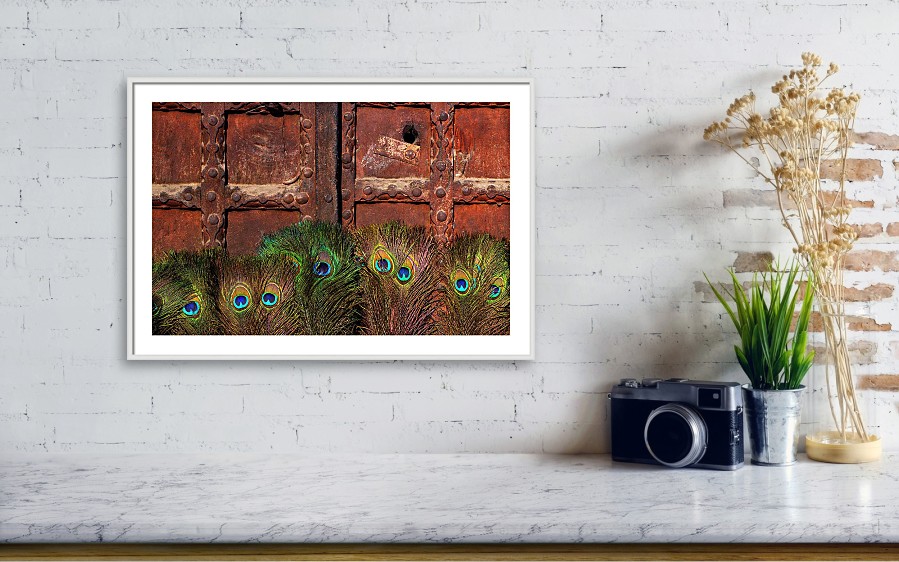
Peacock Feathers Wall Art Framed Print
Peacock Feathers: Wall Art By © Prakash Ghai
Buy a Framed Print

If you are looking to buy wall art online, minimalist photography prints make for a strong choice. They work across interior styles. Living room, bedroom, home office. 

I sell fine art photography prints as framed prints, canvas prints, and metal prints, shipped worldwide. Browse my collection of minimalist wall art and photography prints for home decor here: Buy Minimalist Photography Prints


1. Going Live via Video Communication Apps with a blank wall in the background is not a good idea.


I have personally attended about 6-7 Live video sessions on various subjects during the Lockdown via Zoom, YouTube, Facebook and Instagram Live Apps. I have also seen some Celebrities and TV News Anchors come LIVE on TV or via webcams from their homes. 

Some of the people had well decorated walls with beautiful Wall Hangings and Wall Art. But, majority of the people had Empty Walls behind them. This is seriously a bad idea. That doesn't make for good Audio-Visual content, at least presentation wise.

Now, imagine going Live on a Video Call and having a couple of nice Wall Art pieces displayed on your wall and people complimenting for the choice of your Art, while you are LIVE.

2. Staying home during Lockdowns causes Stress, but hey Art Heals.

Lots of citizens around the world are following Stay at Home orders and are locked indoors for a long period of time. Having your movement officially restricted by govt officials causes Stress, both at the conscious and the sub-conscious levels of your mind.

Simply having some Wall Art could really help you de-stress. All you have to do is keep engaging with the Artwork visually every once in a while. Remember how good you felt when you saw an artwork at an Exhibition? Remember that feeling? Now just try and recreate that in your home.

3. The idea of Shopping itself is a Stress Buster.


Whether you shop for Wall Art online or otherwise, Shopping in general, is a stress busting activity. I have seen lots of people who just shop for the sake of Shopping. In fact, they do it unknowingly to bring down their stress levels. So, don't think too much, if you have never bought any Wall Art ever, just take the plunge and Buy.

Start Here: Minimalist Photography Wall Art 


4. Buy Wall Art directly from artists, instead of donating to Charities that are not that transparent.

While it may be a good idea to support some charities that contribute to the COVID-19 Relief Funds,  you can also choose to Support Artists, by directly buying Wall Art from them. 

Artists need a Bailout too, No one ever bailed them out.

First of all, they leave most of the Mainstream jobs to produce Art. 
Second, some of the Artists might even give up art during this COVID-19 Pandemic altogether. For now, they know that it is about Survival and if they are not able to generate enough income from Art, they would simply give it up forever.

It is our moral duty to support them, while the government tries to support other sectors and people. 

Look what you consumed during the Lockdown the most. Movies, Music, Books, Poetry, Watched Tv Shows, Sports, went on Instagram and saw works of Fashion Designers, Photographers, Sculptors, Painters, etc Correct? 

All of them are artists. Keep supporting them.

If it weren't for the Artists and their Art, we would have gotten bored to death and would have started having mental issues early on in the Lockdown.

5. Good time to introduce your family to Art, for everyone is home.


During the Lockdown everyone is home. This rarely happens. The whole family is together and it is a good time to buy some Wall Art and hang it on the wall where the family generally sits for a discussion. This way, you can introduce your family, especially the young children to Art and get their views and perspective on it.

What a Golden Opportunity isn't it? Will this time come again in our lifetimes? Well, nothing can be said for sure but most likely Not. So, it is time for you to take some action.

6. Feel like your Freedom is curtailed? Art is about Free Expression aka Freedom


Many of us feel like our Freedom is curtailed or rather forcefully taken away. We miss our Freedom terribly. We miss the feeling of being Free, of being able to go anywhere, to do anything without taking anyone's permission.

Guess what Artists do? They express freely and they use their Artwork as a medium for their expression. They don't care for society or for existing Artists or for any Art form dominating them.

They do their art without fear, with free will, with pure expression, and without anyone's permission. When you buy Wall Art from an Artist, you get those feelings of Fearlessness, and Freedom embedded in the Artwork.

All you have to do is put that Artwork on the wall to feel free again. Of course not in the literal sense though, but it matters.

7. To get inspired to pick up a New hobby for yourself.


All your life you had been very busy working all day long, trying to make ends meet. You always thought that one day, you would take out time for yourself and dig your talent and be done with it.

Some of you even tried but did not succeed. You needed more inspiration to continue to explore more about yourself. When you have an Artwork or a couple of Artworks from a few artists placed on the wall in your bedroom, those pieces of Wall Art will inspire you and motivate you everyday to finally pick up a New Hobby for yourself. 

8. Engaging with Art takes you into Introspection.


The more you engage with Art the more you go into Introspection. The more you introspect the more  you come up with solutions to various problems that need to be fixed.

Now the question is, Why is Art able to make you go into Introspection? 
The answer is simple, it helps to break thought patterns, or thought monotony. Once you get off a particular track, only then you can fix it an effective manner. If you try to fix it while at it, chances are you would inflict some self-damage.

9. You have something Offline or Off-screen to engage with in this Digital World.


Having framed Wall Art Prints hanging on your walls in this digital era is priceless. What we all do all day long is, Keep staring at digital screens. Be it the screen of a Laptop, a Mobile Phone or a Television Set.

We need to get off digital screens and get into offline eye and mind engagement for a reset. Wall Art definitely helps us in achieving the same.

10. Art makes you feel Less Lonely.


Imagine being locked up in a room with empty walls around you. You are bound to feel lonely. 

Now imagine, being locked up in a room with 4 Artworks of two different Artists hanging on your wall. Now, you have someone near you, not literally though, but that someone is the souls of artists  with  beautiful free minds visible via their wall art.

Engaging a few minutes each day with such Wall Art, will make you feel psychologically a little less lonely. Sure, in reality no one is there, but that feeling someone is there is enough sometimes.


Forgotten Love Wall Art Framed Print
Forgotten Love: Wall Art By © Prakash Ghai
Buy a Framed Print

To Conclude, I must say that one must seriously consider Buying some Wall Art from Artists during this COVID-19  Pandemic and experience its benefits.

This action of yours would go a long way in motivating the artists and they will carry on creating wonderful art. Art for our souls, lost souls perhaps.

There goes a famous saying, "Without art, Earth is just eh"

30 Oct 2018

55 Photography Tips Every Photographer Must Read Once

Reflection of photographers on a group photowalk in a water puddle, photography tips by Prakash Ghai Jaipur
A group of Photographers walk past a water puddle during a Photowalk organized by Jaipur  Photographers Club on 11th May 2014. © Prakash Ghai

Last Updated: March 2026 


These Photography Tips are easy to understand and they will help you in improving your Photography Skills. 


You can compose a better as compared to other Photographers after going through these 55 Photography Tips. 

Whether you are a beginner who is just starting out his Photography Journey or a Professional Photographer, whether you shoot from a DSLR Camera or with Mobile Phones Cameras, these Photography Tips will help you improve your Photography.

55 Photography Tips Every Photographer Must Read Once


1 - Know what not to shoot. 

2 - Avoid the technical trap. Keep it simple.

3 - Always go on Photowalks alone. You get the best shots.

4 - Shoot a theme each time you are out.

5 - Use color to your advantage.

6 - Look for shapes.

7 - Shoot anytime during the day. Don't restrict yourself.

8 - Shoot with different lenses at the same location.

9 - First compose in your mind.

10 - Use the rule of thirds.

11 - Location advantage. If you can go to a place other photographers don't have access to, you have an advantage.

12 - Watch tutorials on YouTube.

13 - Post your work on at least 1 sales website like FineArtAmerica.

14 - Create your Blog/Website and post regularly.

15 - Be present on at least 2 Social Media platforms and post regularly.

16 - Focus more on Creation rather than on Selling or Commercial angle or else you will spoil your work.

17 - Visit Photography and Art Exhibitions. Give you fresh perspective. 

18 - Organize your own Photowalks.

19 - Avoid too much Feedback. You know what I mean.

20 - Learn from other Photographers. Don't let your ego stop you from learning.

21 - Never delete old work. Never.

22 - Take a back up of your Photos at least once every 15 days at 2 more places other than your computer.

23 - Do not Over Edit. 

24 - Shoot Raw + Jpeg

25 - Set image size to Highest Resolution. Helps in case you need to Crop.

26 - Review your edited photos over a number of days after editing, maybe you are able to edit them better on a later date.

27 - Pass on leads to other Photographers :) Yes, pass them on.

28 - Don't fall in the Narcissism Trap. That would be the end of your career.

29 - Don't succumb to Societal Pressure. Keep working hard, it will yield results if you are earnest.

30 - Never work for Free. Never. 

31 - Consider prevailing market prices before quoting your price.

32 - Go out on a photowalk without the camera once in a while and simply compose with your eyes to practice. This helps, take my word for it.

33 - Get inspired by others work but do not get over inspired, copy and lose your originality. Beware.

34 - Shoot all styles to begin with and pick one genre that your feel comes naturally to you. 

35 - Never depend totally on the on-screen / LCD review of the camera. Check technical specifications after shooting by pressing the Info Button and zoom in to check how sharp the photo is and whether you have missed focus.

36 - Get a Camera and Lens Cleaning Kit. Clean regularly.

37 - Never change lenses with the camera power button on, make sure the Camera is turned off when you do so.

38 - Use a Lens filter to protect the lens. Like a good quality UV filter on top of your lens.

39 - If someone objects at you taking a picture of them or their house, find another place or subject. Don't offend them. 

40 - Always keep an eye on the traffic. Safety first. Its OK if you miss a shot.

41 - Shoot mostly one stop under exposed, it helps during editing. 

42 - Don't be in a hurry to be successful - if you can't give 6-7 years to photography, it better to stay out. Art requires time.

43 - Your garden / terrace and your backyard has many shots hidden in them. Go explore. You will be surprised with what you find.

44 - Go out post a rain-shower and shoot some Water Reflection photographs / Water droplet photographs. Try Water Reflection photography once, you will love it.

45 - Keep an eye on the Cloud formations in the sky. Some days they are a good starting point.

46 - Go to public places like Malls, Airports, Train Stations and Bus Stands to shoot (if allowed). They are full of interesting subjects and architecture.

47 - Go to places, most photographers don't go. Your shots will be different as a result.

48 - Use a hand strap for your camera, as surrounding your neck with your camera belt can cause neck strain/injury.

49 - Go out in the rain to shoot rather than staying back home using rain as an excuse not to shoot.

50 - When it is raining, find a shed, position yourself, put on the lens hood and protective gear and shoot.

51 - Take written permission before shooting at public places like Airports, Train Stations etc to avoid trouble.

52 - Never shoot with your Mobile Camera when you are out with your Digital Camera.

53 - Keep Silica Gel sachets in your Camera Bag to protect your camera from moisture.

54 - Remove Battery from the Camera after use. They will last longer as a result.

55 - Cropping a photograph can carve out a nice frame for you, if done the right way.

If you found these 55 Photography Tips useful, consider sharing the article.


Also, practicing the types of minimalism helps in better structuring your overall compositions. If you are curious as to what camera gear I use to click my photographs click here: Camera Gear

Thank You
Prakash Ghai

Also Check:

31 May 2016

Exploring Suppressed Inner Creativity via Minimalist Photography

Minimalist photography of a door handle long shadow on a wall by Prakash Ghai Jaipur
Minimalist Photography by © Prakash Ghai

This article will help you explore and express your Suppressed Inner creativity via Minimalist Photography


If you feel that everything around you is boring and monotonous, and that feeling makes you want to change or leave your job/work, or maybe go on a vacation, do yoga, meditate etc. 

Then, you are probably one of those Creative Individuals, trapped in a monotonous job, who has not yet answered the call of creativity coming from within. Whoosh ! that was long.

Creative individuals need expression to survive and NOT Suppression. If you have been constantly suppressing your creativity then you might be committing a big mistake.

Creative Individuals must give their suppressed creativity an outlet via some medium, like Photography, Art, Music etc. or they might end up panicking one day and take wrong and drastic decisions to fix things.

I am sure most of you are aware of such facts but certain Thought Barriers must have prevented you from taking the first step. The first step is everything. Once you begin then there is no looking back.

Last Updated: March 2026


Some Examples of Thought Barriers:

 
  • I have a 6 day a week job, I don't have time for it.
  • I do not have enough money for that painting class course.
  • That photography course is really lengthy and the cameras are very pricey.
  • I am a man, creativity is more of a female thing? (...some men)
  • Someday I will definitely take out time for it.(... and you are never able to)
  • Creativity is difficult to learn (.. not realizing we are all creative by birth, we all made tons of different houses with Lego blocks, remember?)
  • I don't work for an Ad agency, why should I explore creativity at all.
  • I will explore creativity only when it is required in my work/job. 
  • Creativity... people might laugh at my work/ideas...as it would be non-standard.
  • Creativity... there is no fixed definition of it, what is the point chasing it.
  • Why waste time in a developing a hobby, I could make even more money in the extra time I take out each day.

The result of continuously suppressing your creativity could lead to:


  • A complete mental breakdown, due to lack of variety in life/newer thoughts/ideas that refresh and re-energize the mind on a regular basis.
  • Or You may suddenly give up your work/job entirely and decide only to follow your creative passion, be it music, painting, art or photography. Not the right move.

So, a better thing to do would be, that one keeps expressing his/her creativity in some portion or form (a little, from time to time) along with their work. Be it once a week or maybe once a fortnight. This keeps everything going. You, then do not need to take drastic steps to fix things.

**Self Expression is key to Mental and Emotional well-being.

For Expression = Meditation


If you are able to express your thoughts or unspoken words via some medium on a frequent basis, then there is no need for any yoga, meditation, vacations to refresh yourself. Your mind will automatically be cleared of unwanted thoughts and will remain fresh/charged for other routine works.

If you are guilty of not giving yourself the time to explore your Suppressed Inner Creativity then don't worry, for I will tell you an easy way to express and connect with your creative self.

And that way is, Minimalist Photography !!!

So now, you may ask why am I claiming Minimalist Photography to be a better and an easier medium to express inner creativity than most other mediums?

Because :-
  1. You don't need to take out loads of time from your busy schedule to click a few pictures.

  2. Even if you decide to shoot on Sundays(like how I do) or once every 15 days, it is sufficient.

  3. Simply read this article What is Minimalist Photography? to begin your journey.

  4. Note: You don't need to travel to specific places to take Minimalist Photographs, because subjects are available everywhere. See post Radiate Love where something as plain and vanilla as a white wall with just a simple geometric shape can be a great subject.

  5. You can create subjects of your own combining different lines and patters/angles. See Example: Subconscious Expression.

  6. Minimalist Photography, quickly gives you the knowledge of color scheme/palettes. i.e which colors look good in combination within a frame. See Minimalism as Few Distinctive Colors, under Types of Minimalism

  7.  All that you need to do is See Shapes, and shoot them. For, in Minimalist Photography the elements represent their core shape/essence. Just make them speak for themselves.

  8. You can create hundreds of different Minimalist frames, just by moving your body from one side to another, or by bending or taking shots from top.

  9. You don't need to buy expensive cameras for it. You can manage shooting from a point and shoot camera or even a good camera phone like Apple iPhone6 or Samsung S6. I personally shoot from SamsungS6/S10 and I both love and hate it. Don't ask me why.

  10. You can also shoot during lunch breaks. Yes, just floors, doors, windows, walls. All these make for nice Minimalist Photography subjects.

  11. This kind of photography is meant for all age groups and for professional and non-professionals both. Basically, Minimalist Photography is for everyone.

  12. Painting, Music and other mediums of creative expression might take months to learn. But Minimalist Photography is something you can begin tomorrow morning. We all are used to taking photos at occasions like birthdays, vacation trips etc. We are already familiar with the camera, aren't we?

  13. Minimalist photography is more of visual art and compositions using basic elements. It has very little to do with advanced technical camera knowledge and equipments. Here, you just need to do the basics right.

  14. I just did not want to finish at point no. 13 (unlucky number for some...)

  15. Since 14 also doesn't feel right to end at, I thought it would be a good idea to ask the readers to sign up via email for the post updates, via point 15. Well, there is small box (with Email Address...as text pre-filled in it) on the Top Right of the website. Enter your Email address there and press the Submit button next to it, to get regular updates from our website.
OK, now that I have claimed that Minimalist Photography is easy and the subjects are available everywhere, lets take a couple of examples.

I) Four Colors - Minimalism as Few Distinctive Colors


Minimalist photography of four color floor carpet overlap by Prakash Ghai
Minimalist Photography by © Prakash Ghai
Buy Now

Explanation: 

As you can see above, there was practically no subject available. I just created one for myself, out of the very boring floor carpet overlap. This is the fun part in Minimalist Photography.

I found this random overlap with shadows giving it company, at an art exhibition. I tilted the camera in my hand to place the intersection point of the four colors on the top left of the frame. I made the lines flow downward to the right, to create a sense of dynamism in the photo. And there you have it, Minimalism as Few distinctive colors. Lets take another example of a common subject below:


II) The Blue Line - Minimalism as Simple Geometry


Minimalist photography of a white staircase with a blue side rail by Prakash Ghai
Minimalist Photography by © Prakash Ghai
Buy Now

Explanation:

Staircases are another one of those very common subjects, that one can probably find almost anywhere. So next time, be on the lookout of staircases. Maybe, you need to avoid taking the lift (and that would also help you shed some extra pounds), for a change.

OK, lets get back to the photo. The key subject here is the Blue Line i.e the side rail of the staircase. This blue line is in complete contrast to the monochromatic white structure, and that is precisely what  prompted me to take the photo. To compose, I placed the blue side rail, on the right of the frame and the horizontal lines of the staircase, were left to fall in place on their own. One can not be perfect with all the shots. Accept that. Likewise, note that I could not manage to keep all the horizontal lines of the staircase steps, straight. But it is OK. 

Minimalist Photography is not about perfection. It is more about the arrangement of few elements within the frame using varied angles and combinations. The challenge is to keep everything simple yet interesting. Incredible visual clarity and letting the shapes speak for themselves is key to this art form.

Lets Conclude: Aren't the two photos examples shown above, really easy to click? Was it very difficult to find the subjects? Well,this proves that Minimalist Photography can give your Suppressed Inner Creativity, the WINGS it needs to fly. Just go out there and shoot. The subjects are unlimited and the number of frames you can produce, are simply infinite.

True Story: This story relates a lot to me. I own and run two retail stores in my city and work 6 days a week. I dislike the monotonous nature of my work. Well, "A Lot". But, Minimalist Photography has really has helped me discover my Suppressed Inner Creativity. I shoot mostly on Sundays. My hobby helps me achieve a weekly de-stress and prepares me for the next week of monotony. 

Without this creative expression, I would have completely fallen apart or I would have forced myself to completely leave business and get into creativity. Right now, I have maintained a fine balance between my hobby and work. Photography has helped me make friends with a lot of like-minded creative people and it feels way better than at work, when I am out with them.

Note: This is my first post, after switching over to a custom domain name i.e. www.PrakashGhai.com I purchased this domain name very recently via GoDaddy.com

Earlier I was using a .blogspot.in domain extension, which was probably not the right move. I had an year long discussion with a friend of mine on this. Now, I realize I should have switched to a custom domain name much earlier. Well, better late than never. Maybe someday, I would do a long post listing the benefits of using a custom domain name for a blog. But for now, Bye. I wish you all a great day.


Read More Articles on Minimalist Photography:-